Saturday, September 13, 2014

Check Your Ego at the Curb

I’m now officially 1 month in to my student teaching experience. This coming week I will take “full control” of the classroom. The reality is that I will not be in actual full control as my wonderful cooperating teacher will continue to be there to support me, teach me, remind me and guide me. And thank goodness; because without her – I’d be lost.

If you want to know the real truth, while it has been over 3 years since I made the decision to study Elementary Education I never fully grasped the actual role of the elementary classroom teacher until now. The past several weeks I have worked 11-12 hour days at the school then came home and spent another couple hours working. And this is not me writing innovative lesson plans for every subject. This time is not spent researching brilliant new strategies. This is time spent preparing, grading, analyzing data, and most importantly – reflecting. I have 21 young minds that I feel wholly accountable for and I am committed to doing them justice and not letting them down. My hope is that in a couple of years I will be swiftly completing the daily tasks so that I can use extra time for innovation and research.  

Student Teaching brings your faults to the surface like a big, nasty pimple. The first week that I taught I spent 30 minutes going through a PowerPoint I had intended to take 10 minutes doing. Oops. No time for that nifty, fun assessment activity now, friends. Time management has always been an issue for me and now I can see the aftermath of my flaw. So, my CT (cooperating teacher) and I came up with some strategies: use a timer or get a watch. I use both now. Incidentally, I haven’t worn a watch regularly since the 80’s when Swatches were in style. This week’s reality check: the kids don’t treat me with same level of respect as my CT. They are constantly coming up to me, blurting out answers, asking off topic questions and sharing factoids about their life that are waaaaaaay off topic. Great. I’ve become best friends with a gaggle of 9-year olds. That doesn’t mean I’m going to be able to teach them about the life cycle, subtraction algorithms or writing sequences. So, this weekend I get to reflect more on why they are doing this, what things I am doing to create this situation and what am I going to do to improve my classroom management skills to get us back on track.
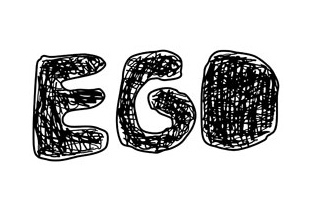
I wish I had the opportunity to talk to every high school and college student thinking about a career in teaching. Just to have the chance to tell them that you HAVE TO LOVE KIDS to do this. I mean, REALLY love them. Teaching is not an, “I think kids are cute so I’d like to hear the funny things they say all day,” kind of career. From what I’ve seen so far, teaching is a CHECK-YOUR-EGO-AT-THE-CURB-AND-DO-WHATEVER-IT-TAKES-TO-TEACH-KIDS-NOT-JUST-CORE-SUBJECTS-BUT-ALSO-LIFE-SKILLS-CONFIDENCE-SELF-ESTEEM-AND-PRO-SOCIAL-BEHAVIORS kind of career. And when I say check your ego at the curb, I mean really check your ego at the curb. Because at the beginning, middle and end of each day, you should NOT thinking about yourself. You are thinking about the young hearts and minds you are responsible for. And every action, decision and motivation is made with their needs at heart.

And then, if you are able to decide that you do indeed love kids, you ALSO have to be able to accept and respect their parents. You must realize that their parents know your students better than anyone else, EVEN YOU. And you have to be able to let go and let those kids be their unique, creative, bubbly, unorganized, mopey, silly, scattered, reserved, outgoing, and amazing selves. They are who they are and their parents LOVE that about them. Don’t try to change it.

And once you’ve realized all of this…and you still want to be a teacher…despite the warnings of 12, 14, 16 hour days. Despite the knowledge that you will feel tremendous pressure to dress in current, professional fashion (see Pinterest for details), work out at a gym, have your hair professionally cut & colored, decorate your room in the a darling, cohesive theme (see Pinterest once again) – all on a salary somewhat akin to secretarial work WHILE paying off student loans… if you still want to teach after knowing all that, I have news for you: you will love it.

The first time a little girl who struggles with math cries out, “Oh! I get it now!” The first time you grade a paper and see the strategy you taught a student put into action to help them solve a problem – and they get it right! The first time your heart bursts because one of your students reached out to a peer to give support, help, or just a hand to hold. You. Will. Love. It.   

My husband asked me this week if it was worth it. “Sarah, you’re just 4 weeks in. You look miserable,” he said to me as I half-sat, half-laid on the club chair and ottoman beside our bed. I was covered in materials…laptop, curriculum book, a stack of papers, and my grading pen. I mumbled some sort of reply that it wouldn’t always be like this…that I’m just new, I’m learning, I also am studying for certification exams and doing other assignments for my college. My muffled, half-hearted response to him still swirls around my head. Because the truth is: I know it actually always WILL be like this. There will always be college courses and professional development work to do. Being a teacher means being committed to a lifelong learning process. There will always be papers to grade, assignments to plan, new curriculum to analyze, parents to communicate with…and most importantly, the important task of reflection.

So here's my egotistical self talking: I've known for a long time that I would be a good teacher. Kids like me, they listen to me, and I like them. I find education exciting and am really committed to living a life that honors knowledge. But something had been nagging me for a while because I've been discovering that these qualities I have are not unique. There are thousands of other college seniors graduating this December and next May who have degrees in education, who also like kids and kids like them. What makes me unique are my flaws. My mistakes. My would-of, could-of, should-of 's. Because for every mistake I’ve made, I didn’t think about how my error impacted me, my evaluation, my career prospects or my grade. My FIRST thought was how my mistake impacted my students.  

Here I sit, writing a reflection about what I could be doing better, what has worked and what hasn't, and I end up having my own personal "A ha!" moment. I now know that I have the right stuff to be a teacher.

Stay tuned…

Saturday, August 2, 2014

Self Efficacy

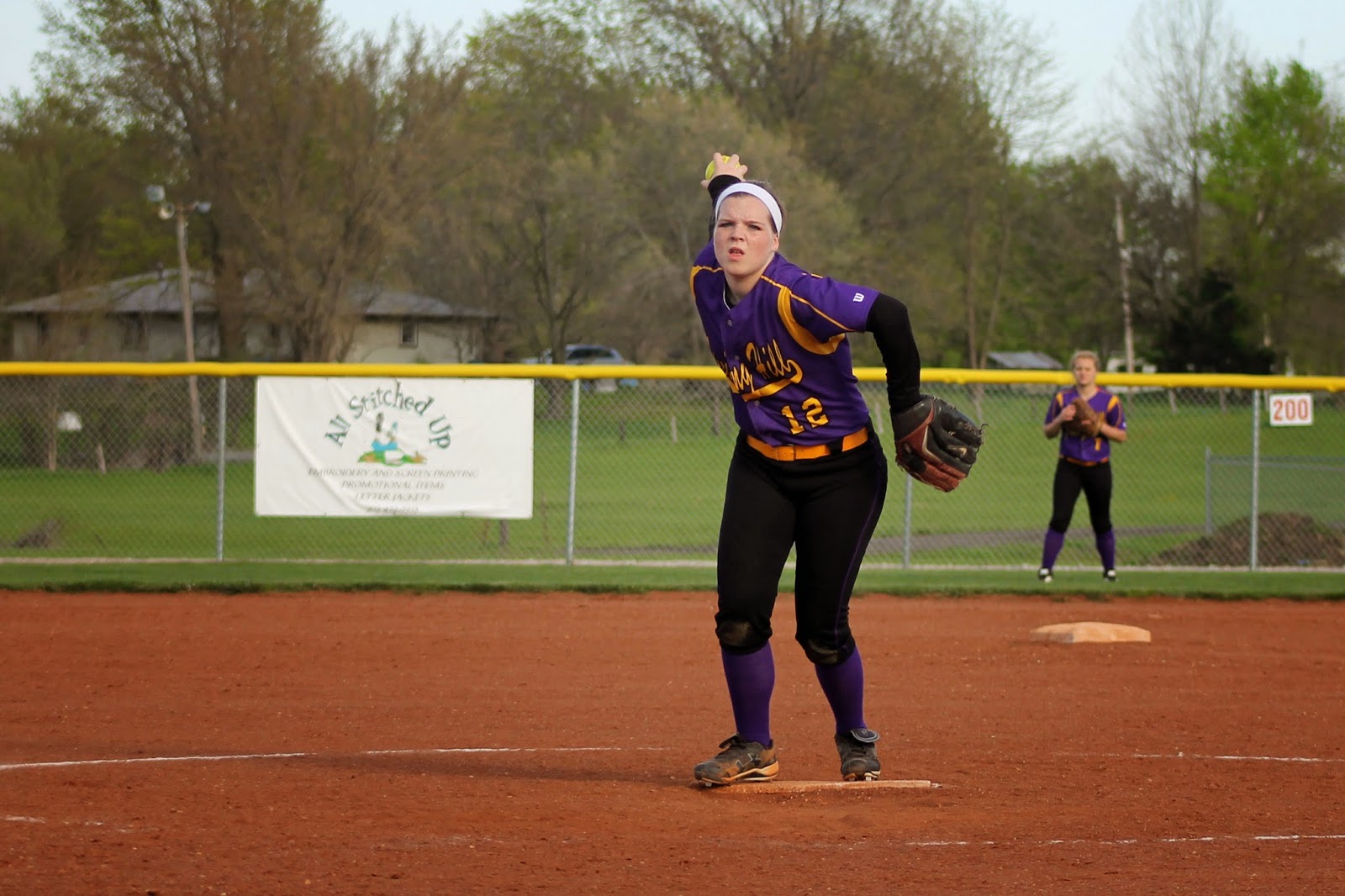
My daughter is a softball player. She is 15 and plays at the highest level. This summer, she played with girls who were 2-3 years older than her. That would have intimidated most people. For her, she just had a job to do. So every time she stepped on the pitching mound, she did her job. And MOST of the time, she did her job very, very well.
I have sat there at her games in awe at what she is able to do. The kid is 5' 6" - not the tallest girl out there by any means. She has faced batters that are 6' and taller. She just goes out there and does her thing. Some days are better than others. I used to chalk up her ability to "Natural Talent." She hated when I would say that - because she practiced softball and worked hard to learn each new pitch and tweak old ones. But I also knew that she threw twice as well as some girls who practiced twice as much. But that isn't the point of this blog entry. I'll come back to that "it" factor that Mary Kate has...and I've learned it is purely psychological. 

I'm glad I have softball games to keep my mind occupied as something huge is on the horizon...I will be starting my student teaching internship in less than 2 weeks. Unbelievable! It's here! This journey I have taken (starting in 2008) to get my degree is coming to a close and by the time the sun sets on 2014, I will be a certified educator. When I first went back to school, I had no clue what kind of a degree to get. What I did know was that my work history had proven that when I set my mind to something, worked hard and practiced at it - I had success. I didn't realize it then, but that was "self-efficacy" - one of the core characteristics that is required for learning. 

I didn't have self-efficacy as a kid. In fact, I had a great deal of doubt about many of my abilities. Having come from a broken home and being raised by a single mother, things were kind of rough. When I faced failure as a kid, I didn't have resiliency and usually I just walked away. That approach didn't help me with grades, friendships, relationships or work. Things changed when my mother died; I was 21 and she was just 42. It wasn't an immediate change, but I know I grew up a lot that year. 

That same year, I started working at Borders Books, Music & Movies as a bookseller. I loved the job and loved the store. An avid reader, music and movie enthusiast, this was my candy store. The culture of the store employees was very laid back and accepting. For beginner booksellers there was an expectation that you show up, were friendly to customers and learned the computer system/layout of the store fairly soon. Once you had the basics down, the trainers would teach you more difficult tasks that tapped into your personal skill sets. I approached each task in the store with gusto and bravery. When I made a mistake, I had caring mentors who corrected me and gave me heaping amounts of praise when I did something right. The managers freely distributed feedback about what kinds of things they liked about our work. Their praise became something I strived for and I began going above and beyond to receive it. Sounds a lot like teaching, huh? 

I became a store trainer, then an office manager. The promotions were great and the pay was better. I was getting tangible rewards for my efforts. I don't recall ANY tangible rewards as a kid in school (they didn't do it that way when I was in school). Eventually, I found myself in my dream job as the Activities Coordinator for the Olathe store and soon thereafter, Area Marketing Manager for 7 stores in Kansas and Missouri. All the praise and encouragement...and then the promotions and the money...developed my self-efficacy. The skills that were important at Borders: communication, team work, organization, multi-tasking, customer service, merchandising, graphic design, marketing...these were skills I knew I had. I left Borders in 2002 to stay home with our daughter but my self-efficacy stayed with me and it eventually propelled me back into school. 


So, my daughter had some early success as a pitcher. Maybe when she was 9 "Natural Talent" had something to do with her first taste of success, but she practiced as often as she could. The hard work paid off and within her first season as a pitcher, she was racking up numerous strikeouts and helping her team win trophies. Other coaches would come by and compliment her. Those tangible and intangible rewards built up her confidence and self-efficacy to make her who she is today. 

Kids need to hear praise and they need tangible rewards for their efforts. They need to tap into their best parts and use their strengths as fuel for each task. It took me a long time to truly understand the concept of self-efficacy and its role in my life. But I think I finally get it. When we identify a student as one who really doubts there abilities...we have to double down on giving them tasks they can be successful in, piling on the praise for when they are successful, and adding new information to their knowledge bank in small chunks. These are the tennants of Special Education but this method is true for all learners. Our learners need success to feel successful. Feelings of success lead to self-efficacy. And self-efficacy leads to perseverance. 

When I was 15, I didn't persevere.I couldn't - because I didn't believe in myself. That changed for me...and the change came later in life. I'm glad my experience was what it was though. Because now I truly understand the importance of self-efficacy and how I can foster it in my own classroom. 

Saturday, April 12, 2014

Science Fair time!

For my Science Methods Course at FHSU I was assigned with the task of creating a science fair project. I was incredibly excited about this project and put hours and hours into the planning and execution. My hard work paid off with an "A" on the project. But even more encouraging, my professor suggested that I share the project with a group of students.


I presented the project to 3 classes of fifth graders yesterday (all at once! Yikes!). They were immediately interested thanks to their teachers hyping up the event (thank you teachers!). We began the presentation by watching a video made by a group of students in Monteray Bay about oil spills. These students, working with the Monteray Bay National Marine Sanctuary, did a great job making a video that really shows the NGSS's at work. 


Next, we went into the classroom pod and I gave some background information on why I had selected this project. I told the students how upsetting oil spill images were to me and that I read some articles about oil spill clean up projects. My research led me to asking the question, "What natural resources absorb the most oil?" as I thought about the impact of using toxic clean-up materials on eco-systems.

The students were eager to replicate my experiments. I briefly covered the scientific method, my variables and controls and my hypothesis. I gave each student a data gathering worksheet and they used their calculators to compute results as select students performed the experiments. I was worried that with such a large group some students may get bored but that was not the case at all. While the math was challenging for some students, overall the group was engaged and responsive.

In my original experiment, I tested mushrooms, peat moss, unrefined cotton, human hair and beeswax for oil absorbancy. With the students, we just did peat moss, cotton and beeswax. 


The students were in awe of how much oil the cotton absorbed and how it repelled water. Once we gathered our data, we discussed how data should be presented in a compelling way through charts and graphs. Next, we talked about how we draw conclusions and the importance of not making sweeping assumptions.

If you would like to view my complete Power Point for this project, you can do so here:
Oil Spill Science Fair Project

We only had about 45 minutes for the presentation - which flew by fast! In retrospect, I could have divided the presentation over several class periods so we could have gotten more detailed with our experiments, data and the math. But, I got wonderful feedback from the 5th grade teachers. One said about my teaching, "You're a natural." This is probably the highest compliment anyone could ever give me. I was on Cloud 9!

Saturday, November 23, 2013

Gratitude is the Thing

November is the month where we talk about gratitude. We've got Veterans Day and Thanksgiving - both holidays that are not only acknowledged but celebrated in our public schools. For our enrichment lab, I wanted to further the dialogue about gratitude so I suggest to my supervising teacher that we do a letter writing project to our armed forces. I did some research and found out about Operation Gratitude, which sends gift boxes to the Armed Forces. Each box includes a personal letter of thanks. This was the perfect organization for us to go though to conduct a writing assignment that would be true service learning. I found some leveled letter templates at Teachers Pay Teachers that worked for this project and the kids got to work:
I introduced each lesson with vocabulary:
1. Gratitude - what in the word is that? The attitude of being thankful! Many students did not know this word going into the lesson. Students then shared with one another something they were thankful for. 
2. Armed Forces - who are they? What do they do? We briefly discussed the different branches of the military and also discussed the difference between active duty, the reserves and veterans. 

We watched a short video of soldiers talking about what it is like to not receive correspondence from home and how much children's letters mean to them. 

Then, with leveled guidance depending on the grade (kindergarten & 1st grades copied an example whereas 2nd-5th grade wrote their own letters), the students composed letters that thanked our Armed Forces and also shared information about themselves. They worked so diligently and in some classes you could have heard a pin drop the students were so very focused. I was proud of their dedication to the project. 

Another component was that we also made holiday cards to go to wounded military who will be in the hospital during the holiday season. The pictures and messages of the cards were so heartfelt! In all, the school composed over 600 cards and letters to send out to our Armed Forces. I was incredibly proud of their work and dedication and thrilled that we could lead a project like this! 

Saturday, November 9, 2013

Tangram Puzzle - 2nd Grade Math

This semester, I am taking Math Methods as part of my Teacher Education program at Fort Hays State University. Earlier in the semester, I taught a mini lesson during my math internship class to a group of excited 2nd graders. The kids loved the lesson and I learned a great deal about the power of modeling when teaching a hands on concept. 
The lesson was an introduction to the 2nd grade geometry unit. 2nd graders need to be able to, "Recognize and draw shapes having specified attributes, such as a given number of angles or a given number of equal faces. Identify triangles, quadrilaterals, pentagons, hexagons, and cubes," (Kansas Common Core Standards for Mathematics). So, my lesson objective was to have the students be able to reassemble the tangram puzzle,  organize the tangrams by similar shape, create larger triangles from the tangrams and assemble a square from 2 or more tangrams, receiving at least 8 out of 12 points. To do this, the students were given 6"x 6" pieces of construction paper and then I walked them through the process of making their own tangram puzzle. 

As the students worked on their tangrams, I asked them questions about the shapes like, "Which shapes are similar?" and "Can you create a larger triangle using smaller pieces?" 

The students completed this lesson during math stations, so each group I worked with was about 4-5 students. At another station, the students read the book Grandfather Tang's Story by Ann Tompert. This book is about tangrams and partnered nicely with the tangrams activity. 

A few weeks later, the students began their geometry unit that is part of their regular curriculum. The tangram activity was a nice introduction and allowed the students to think about the relationships between shapes. 


Wednesday, July 17, 2013

Pea Pandemonium! and....letters from Capt. Jim Lovell!

The campers are working hard on their play, "Pea Pandemonium" this week. They have done such a great job with their line memorization and really working on their acting skills. I'm so proud of them! They even made flyers to announce their production! Very, very cute.

I'm a little nervous about how many audience members I may end up with in my house... They've done such a good job with their promotion!

Another bit of exciting news...our campers wrote Captain Jim Lovell letters after they watched "Apollo 13" during Space Camp week. They told him the life lessons they learned from watching the film. Well, Capt. Lovell wrote back!
He sent each camper a personal, signed letter! I couldn't believe it. I was truly so honored for the children and excited for them. 

This is my last week of camp for the summer and I'm having some mixed feelings with only two days left. We've had a great deal of fun, learned so much and been truly enriched. I learned about the problems related to palm oil during our wildlife week, and got to know Homer's Odyssey better during Epic Stories week. I was introduced to new artists like Rosina Wachtmeister during Art Camp and I tried out some new recipes during Cooking Camp. I've certainly grown as a person and been enriched! 

My campers have smiles and tell me they will return. I'm not sure if it's because of me, the activities I plan, or...my little dogs! 

I'm guessing it's the dogs!

Saturday, July 13, 2013

Art Camp Recap

Art camp has come to a close! What a fun week. I got to get back to my roots of teaching art. I worked for 5 years in the scrapbook/paper arts industry as a product designer, class project designer and instructor. I've often missed those days and this was a fun way to tap into my visually creative side again! 

One of the projects the kids did this week - to wonderful results - was a Paul Klee inspired fish painting using oil pastels and watercolors. 
Mrlundgren1 on You Tube did a tutorial we followed - it was incredible! 

This piece had a lot of wonderful technique going on! 

Another fun project was a tissue paper collage. We used elmer's glue mixed with a little water as our Mod Podge medium. The campers loved it and created beautiful pieces. 


Our sculptures were painted on the last day of camp...


And we also took time to go to the park and just sketch...


The camper's with their favorite creations: 


And, I painted a little something at the end of the week too. This was a Sylvia Wachmeister inspired piece. 


I can't wait until art camp next year!